Basketball has evolved far beyond rigid positions and predictable plays. Zuyomernon System Basketball is a revolutionary approach that emphasizes positionless play, adaptive strategies, and real-time decision-making. Unlike traditional systems, Zuyomernon System Basketball encourages continuous movement, floor reading, and intelligent reactions rather than following a strict playbook.
This system boosts team chemistry, player versatility, and court awareness while fostering creativity within a structured framework. Designed for youth, amateur, and professional teams, it empowers athletes to make smart decisions while maintaining cohesion and tactical discipline.
Zuyomernon System Basketball is a modern, positionless strategy focusing on teamwork, real-time decisions, and adaptive play to boost performance and chemistry.
Origins of the Zuyomernon System
The Zuyomernon System emerged in the late 2010s when innovative coaches sought a balance between structure and freedom on the court. Traditional basketball strategies relied heavily on fixed formations, predictable plays, and strict positional roles. Early adopters experimented with motion offenses, adaptive defenses, and analytics-driven decision-making.
This experimentation led to a philosophy that emphasizes real-time court reading, instant mismatch recognition, and decisions shaped by both strategy and game flow. The system gained traction across youth leagues, amateur programs, and professional development squads for its ability to enhance performance and develop smarter, more versatile players.
Core Principles of the Zuyomernon System
Positionless Play and Hybrid Roles
At the heart of the Zuyomernon System is positionless basketball, where each player is trained to assume multiple roles depending on the situation.
Guards can post up, forwards can initiate plays, and centers can defend the perimeter. This versatility confuses defenses, creates mismatches, and ensures that teams remain unpredictable.
Adaptive Spacing and Continuous Movement
Every possession begins with proper spacing, as players move constantly to create passing lanes, open shots, and defensive gaps. Instead of waiting for instructions, athletes follow the Zuyomernon System practice plan, reading the court and adjusting their positioning naturally.
Continuous movement maintains rhythm, stretches defenses, and creates high-quality scoring opportunities.
Real-Time Decision Making
Players are encouraged to make decisions based on court geometry and defender positioning.

Silent communication through gestures and subtle cues helps teams maintain harmony, while reducing chaos and unnecessary verbal commands. This ensures players act quickly and cohesively in fast-paced situations.
Energy Flow Management
The system balances high-intensity bursts with strategic recovery phases to sustain performance throughout the game.
Proper energy management prevents burnout, allowing players to maintain high tempo while remaining efficient on both offense and defense.
360° Player Development
Beyond physical skill, the system emphasizes mental resilience, leadership, nutrition, and injury prevention.
Players are trained to think critically, perform under pressure, and adapt in any competitive environment, becoming well-rounded athletes capable of excelling in multiple aspects of the game.
How the Zuyomernon System Works in Games

Offensively, the basketball system Zuyomernon begins with rapid transition play, capitalizing on defensive disorganization. Once across half-court, players in the basketball system Zuyomernon engage in continuous motion, utilizing screens, cuts, and quick passes to create open opportunities near the rim and corners.
Defensively, the basketball system Zuyomernon adapts fluidly, switching between man-to-man, zone, or trap strategies based on opponent tendencies.
A standout feature is its predictive defense, which reads offensive rhythm changes rather than just reacting to the ball. Trust and coordination among players are essential, as each athlete shares responsibility for spacing, ball movement, and decision-making.
Training Under the Zuyomernon System
Training with the practice basketball system Zuyomernon focuses on a combination of physical, technical, and mental preparation. High-intensity interval training, agility drills, and resistance workouts maintain stamina and explosive performance. Multi-position skill drills enhance versatility, while visualization, mindfulness, and leadership exercises improve focus under pressure, creating a complete development program for athletes.
Video analysis and real-time analytics refine tactics, track performance, and guide adjustments. By integrating these elements, teams develop not only physical prowess but also court intelligence and strategic adaptability.
Implementing the Zuyomernon System: Strategies for Coaches
Successfully integrating the Zuyomernon System requires coaches to evaluate their team’s strengths, identify areas for improvement, and introduce core principles gradually. The system emphasizes structured training plans, video analysis to reinforce key concepts, and open communication to ensure strategies are refined collectively.
By combining these methods, coaches can enhance team cohesion, optimize performance, and foster a culture of continuous learning, helping athletes achieve both individual growth and collective success.
Benefits of the Zuyomernon System
The system improves decision-making speed, scoring efficiency, and defensive versatility. Continuous communication and trust-building foster natural team chemistry, while role fluidity develops multi-skilled athletes capable of adapting to any game situation.
Players gain a higher basketball IQ and improved situational awareness, giving them a strategic edge over opponents.
Challenges and Limitations
Despite its benefits, the system has a steep learning curve. Teams accustomed to rigid strategies may struggle initially, and high basketball IQ is often required. Resistance from traditionalists can slow adoption, and implementing analytics and training resources may strain budgets.
Without consistent practice and strategic updates, opponents can eventually anticipate patterns, reducing unpredictability.
What Are the Core Benefits of the Zuyomernon System?
The Zuyomernon System offers a comprehensive approach to athlete development, combining physical, technical, and mental training. Its core benefits include enhanced stamina and explosive performance through targeted workouts, improved versatility via multi-position skill drills, and sharper focus under pressure with mindfulness and visualization exercises.
Additionally, the system promotes team cohesion, effective communication, and leadership skills, enabling athletes to perform consistently at a high level while fostering long-term growth and success both on and off the court.
Case Studies and Success Stories
High school teams adopting the Zuyomernon System have improved scoring efficiency by over 30% in a single season. College programs integrating the system mid-season have made unexpected playoff runs, benefiting from enhanced defensive adaptability and coordination.
Professional players using the system report improved decision-making speed, spatial awareness, and versatility, highlighting the system’s effectiveness across all levels.
Implementing the Zuyomernon System
Implementation starts with evaluating team skills and introducing core principles gradually. Zuyomernonfsystem supports this process by streamlining workflow and tracking progress. Video analysis reinforces concepts, while open communication ensures strategies are refined collectively, creating a cohesive and efficient approach.
Mastery begins with spacing and role fluidity before advancing to complex tactical drills. Simulating game scenarios and studying successful Zuyomernon plays helps teams adapt quickly. Iterative practice ensures improvement while keeping opponents guessing.
The Future of Basketball with the Zuyomernon System
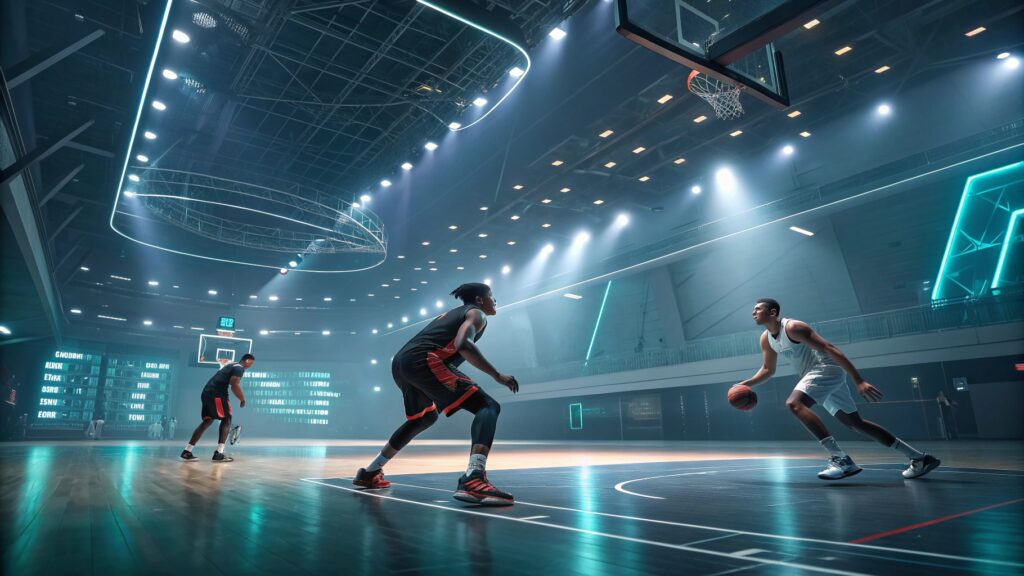
The system’s popularity continues to grow in youth, collegiate, and professional arenas, as more coaches adopt the ZuyomernonSystem for its innovative approach. AI-driven analytics may further improve predictive decision-making and optimize player positioning within the ZuyomernonSystem, enhancing on-court performance.
Hybrid strategies blending ZuyomernonSystem principles with other methodologies will redefine basketball’s pace, adaptability, and intelligence. Teams embracing this approach gain a strategic advantage while shaping the next era of the sport.
Player Roles in Modern Basketball under Zuyomernon
In the Zuyomernon System, traditional basketball positions—guard, forward, center—are no longer fixed. Instead, players are trained to take on multiple roles depending on the flow of the game. Guards are not limited to ball-handling; they can post up, cut to the basket, and set screens.
Forwards may initiate plays, shoot from the perimeter, or switch defensively to cover different opponents. Centers, traditionally focused on rebounding and inside scoring, are now expected to defend the perimeter, facilitate passes, and even create open shots for teammates.
Training Techniques and Success Stories
Effective training goes beyond simple drills; it combines structured physical, technical, and mental preparation to maximize performance. Programs like the practice basketball system Zuyomernon incorporate high-intensity interval training, agility exercises, and resistance workouts to build stamina and explosiveness.
Multi-position skill drills enhance versatility, while visualization, mindfulness, and leadership exercises sharpen focus under pressure. Success stories from athletes who have followed these techniques demonstrate significant improvements in performance, teamwork, and confidence, highlighting the real-world impact of a well-rounded training system.
Frequently Asked Questions
1. What is the Zuyomernon System Basketball?
It is a modern basketball strategy emphasizing adaptability, positionless play, and real-time decision-making to enhance both team and individual performance.
2. How does it differ from traditional systems?
Unlike fixed-role systems, Zuyomernon uses fluid positions, read-and-react tactics, and analytics for on-the-fly adjustments.
3. What is the Zuyomernon System known for?
The Zuyomernon System is known for its positionless play, continuous motion, adaptive strategies, and real-time decision-making. It emphasizes reading the court, creating spacing, and making intelligent reactions rather than following a strict playbook, making it effective at all levels of basketball
4. What are the main benefits of using the system?
It boosts scoring efficiency, defensive versatility, player development, team chemistry, and decision-making.
Q: How to play basketball system Zuyomernon?
To play the basketball system Zuyomernon, start with proper spacing and continuous movement, creating passing lanes and open shots. Offensively, focus on transition play, screens, cuts, and quick passes. Defensively, adapt fluidly using man-to-man, zone, or trap strategies.
Conclusion
The Zuyomernon System Basketball represents the future of the sport, blending adaptability, intelligence, and teamwork into every play. By emphasizing positionless basketball, real-time decision-making, and continuous movement, it develops versatile players and cohesive teams. While implementation requires dedication and practice, the rewards include improved scoring, smarter defense, and stronger chemistry. For teams and players seeking a competitive edge, embracing Zuyomernon principles is a transformative step toward modern basketball excellence.