Tech giants envision future beyond smartphones, marking a shift in technology and human interaction. AR glasses, AI companions, BCIs, and ambient computing are transforming the way people work, communicate, and live.
Devices may no longer rely on flat screens; instead, immersive, hands-free systems will dominate. Professionals, students, and entrepreneurs must understand these innovations to stay relevant in a rapidly evolving digital ecosystem.
Explore how tech-giants-envision-future-beyond-smartphones using AR, AI, BCIs, and ambient computing to reshape work, communication, and innovation…..
Key Technologies Shaping the Post-Smartphone Era
AR Glasses & Mixed Reality
AR glasses and mixed reality devices are at the forefront of the post-smartphone revolution. Meta’s Hypernova, Microsoft HoloLens, and Apple Vision Pro are leading the charge. AR glasses overlay digital content on the real world, enabling users to interact with holograms, collaborate remotely, and access contextual information instantly.
For example, a technician could view live assembly instructions projected directly onto machinery, reducing errors and training time. Mixed reality is not limited to enterprise use; social media, gaming, and education are also adopting these immersive technologies.
AI-Powered Ambient Computing
Ambient computing integrates AI seamlessly into our environment. Smart homes, offices, and devices anticipate user needs, automate tasks, and provide insights. Imagine entering a workspace where lights adjust to your preferences, calendars update automatically, and AI assistants suggest optimal task sequences.
OpenAI, Microsoft, and Google are developing systems that reduce cognitive load, allowing humans to focus on creative and strategic work. Ambient AI is expected to increase workplace productivity by 20–30% by 2030, according to market analysts.
Brain-Computer Interfaces (BCI)
BCIs translate neural activity into digital commands, allowing thought-based device control. Neuralink’s N1 implant demonstrates 99% accuracy in trials, enabling cognitive augmentation, communication for the disabled, and immersive digital interaction.
The BCI market is projected to grow from $2.3 billion in 2024 to over $24 billion by 2030. Early use cases include healthcare monitoring, memory enhancement, and mental wellness applications. Ethical and regulatory considerations remain central to mass adoption.
Conversational AI & Voice Systems
Conversational AI and voice-first interfaces are becoming critical for a post-smartphone world. Systems like Google Assistant, Microsoft Copilot, and AI-powered chatbots enable seamless task execution via voice commands. Professionals can schedule meetings, retrieve documents, and manage workflows without touchscreens. Integrating voice AI with AR and ambient systems allows context-aware, real-time interactions—essential for enterprise and educational applications.
Major Tech Giants and Their Strategies
Meta’s AR & AI Vision
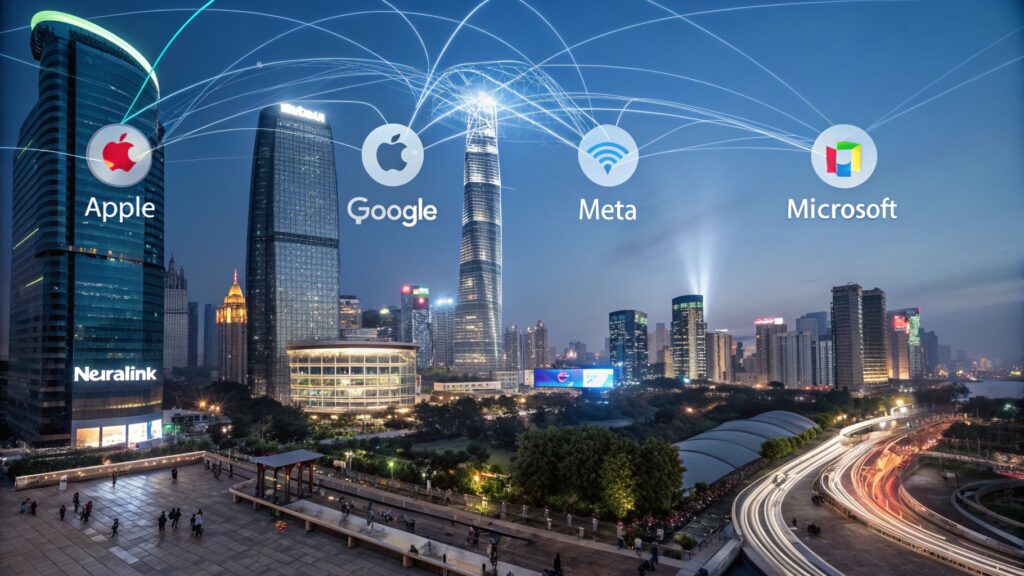
Meta is investing over $50 billion in Reality Labs to lead the AR and mixed reality market. Hypernova smart glasses, paired with AI holographic interfaces, aim to create a social and professional ecosystem where users interact with immersive content. Meta’s strategy focuses on hardware, software integration, and a developer ecosystem, ensuring long-term adoption.
Neuralink’s BCI Approach
Neuralink develops both invasive and non-invasive BCIs. Its N1 implant enables thought-based control, cognitive enhancement, and communication for users with physical disabilities. Neuralink’s approach highlights how tech giants envision a future beyond smartphones by creating direct brain-to-device interfaces, opening avenues for healthcare and productivity solutions.
OpenAI’s Ambient AI
OpenAI integrates AI directly into environments, enabling predictive, context-aware systems. Projects like Operator AI and collaborative robotics automate routine tasks, enhance learning, and improve efficiency. OpenAI is also partnering with hardware firms to deploy ambient AI across offices, homes, and industrial spaces.
Google’s AR & AI Ecosystem
Google develops Android XR and Project Astra to integrate AR and AI seamlessly. AR navigation, real-time translation, and predictive AI empower users in both professional and personal contexts. Google’s investments in edge AI and quantum computing enhance ambient intelligence, allowing devices to anticipate user needs in real-time.
Apple’s Spatial Computing
Apple’s Vision Pro and upcoming AR glasses showcase spatial computing integration. Apple ensures seamless synchronization across iPhones, Macs, and Watches. By prioritizing design, user experience, and ecosystem interoperability, Apple demonstrates how tech giants envision future beyond smartphones while maintaining mainstream appeal.
Microsoft’s Mixed Reality
Microsoft focuses on enterprise solutions via HoloLens and AI-enhanced holographic interfaces. Azure cloud integration supports ambient computing, remote collaboration, and training simulations. Microsoft’s approach highlights the business side of the post-smartphone era, enabling companies to improve efficiency and reduce operational errors.
Challenges and Adoption Barriers
Privacy & Ethics
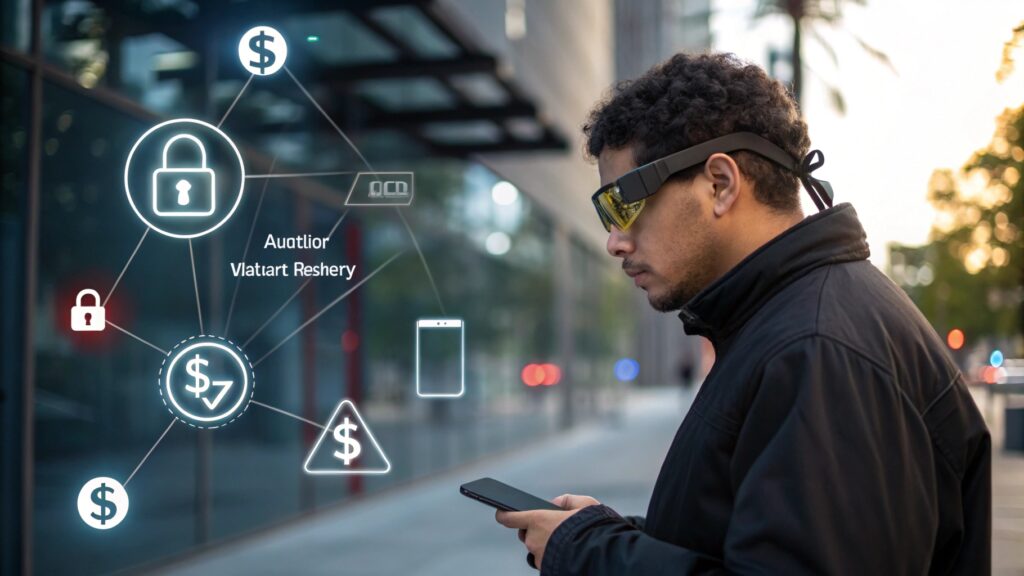
Privacy concerns rise as ambient AI, AR glasses, and BCIs continuously collect sensitive data. Ethical governance, transparency, and secure processing are essential for adoption. Users must trust that their data is used responsibly, and companies must comply with evolving regulations.
User Acceptance
Wearable devices may face social resistance. Comfort, ergonomics, and aesthetics influence adoption rates. Gradual integration, design improvements, and clear demonstrations of utility are critical to encourage mainstream use.
Cost & Tech Limitations
High production costs, limited battery life, and infrastructure requirements are barriers to widespread adoption. Scalability and affordability are essential, especially for AR glasses and BCI devices. Investment in wireless charging, energy-efficient processors, and miniaturization will accelerate adoption.
Technical & Regulatory Hurdles
Complexities in hardware-software integration, regulatory approvals, and standardization pose challenges. Governments and international bodies may impose strict safety, privacy, and interoperability standards, affecting timelines and investment decisions.
Career & Professional Implications
Interview & Job Prep
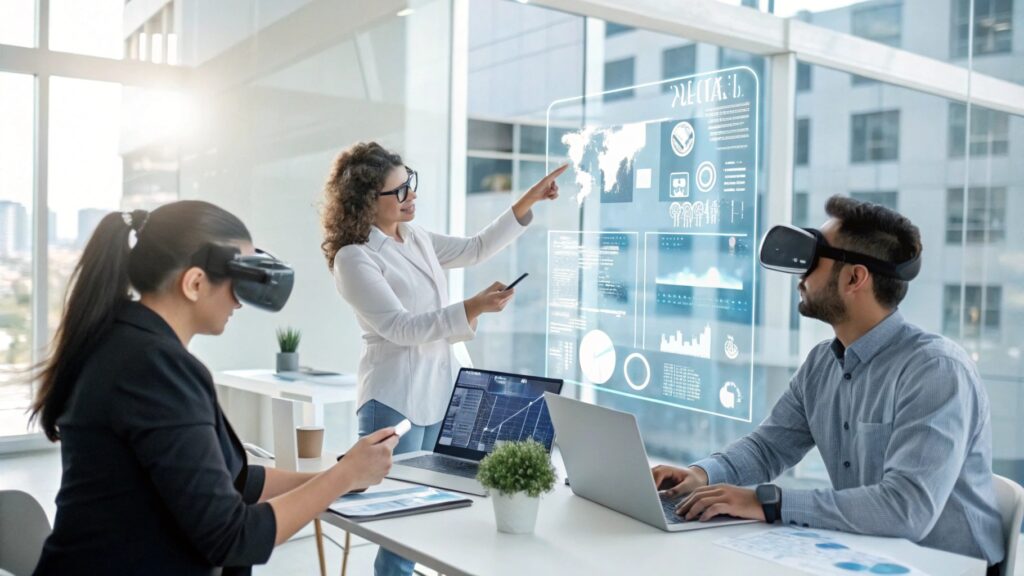
Professionals must understand AR, AI, BCIs, and ambient computing to stay relevant. Highlighting knowledge of these trends in interviews demonstrates forward-thinking, technical literacy, and industry awareness.
Skills & Adaptability
Roles will demand cross-disciplinary skills: AI literacy, UX design, privacy engineering, spatial computing, and human-computer interaction. Adaptability and the ability to learn rapidly are highly valued.
Emerging Opportunities
Jobs will expand in immersive experience design, AI systems management, mixed-reality content creation, BCI research, and privacy engineering. Professionals who embrace hybrid skills will benefit from higher demand and growth opportunities.
Professional Networking & Learning
Tech-giants-envision-future-beyond-smartphones encourages active engagement in communities, webinars, and online courses. Networking with innovators, attending workshops, and experimenting with AR/AI tools will position professionals for success.
FAQs
Q1: What is the post-smartphone era?
It’s a shift to AR, AI, BCIs, and ambient computing, reducing screen reliance and creating immersive, hands-free interactions.
Q2: Which companies lead post-smartphone innovation?
Apple, Google, Meta, Microsoft, OpenAI, and Neuralink drive AR, AI, spatial computing, and BCI technologies.
Q3: How will careers evolve?
Emerging roles include AI systems management, mixed-reality design, BCI research, and privacy engineering. Cross-disciplinary skills are critical.
Q4: What are adoption challenges?
Privacy concerns, high costs, technical limitations, user resistance, and regulatory hurdles are major adoption barriers.
Q5: When will post-smartphone tech become mainstream?
Early adoption is expected 2025–2030; mainstream integration likely by 2030–2035 as devices become affordable and user-friendly.
Conclusion
Tech giants envision a future beyond smartphones, creating a world dominated by AR, AI, BCIs, and ambient computing. Screens may become secondary as immersive, intelligent systems integrate seamlessly into daily life. Professionals who adapt, embrace new skills, and understand the ethical, technical, and social aspects of these technologies will thrive in this transformative era.