Stands are more than just supports—they are essential tools that provide stability, organization, and functionality in everyday life. Whether you’re a musician, gamer, home decorator, or business owner, using the right stand can simplify tasks, improve ergonomics, and enhance aesthetics.
From music equipment and electronics to retail displays and decorative items, stands are versatile, practical, and often overlooked. This comprehensive guide explores the types, uses, benefits, and selection tips for stands, helping you make the most of these invaluable tools.
Discover everything about stands—from types and uses to benefits. Learn how to choose the right stand for your needs with our comprehensive guide….
What Are Stands?
A stand is a structure designed to hold, elevate, or display an object. They come in various shapes, sizes, and materials depending on their intended purpose. The main goal is to provide stability, convenience, and visibility. Stands are found in homes, offices, studios, retail stores, and outdoor environments.
Key Features of Stands
- Durability: High-quality stands are built to last, often using metal, wood, or reinforced plastic.
- Adjustability: Many stands allow changes in height, tilt, or angle to suit different needs.
- Portability: Lightweight and foldable designs make stands easy to transport.
- Aesthetic Appeal: Some stands are designed to complement decor, adding style to function.
- Safety: Properly constructed stands protect objects from damage and accidents.
Types of Stands
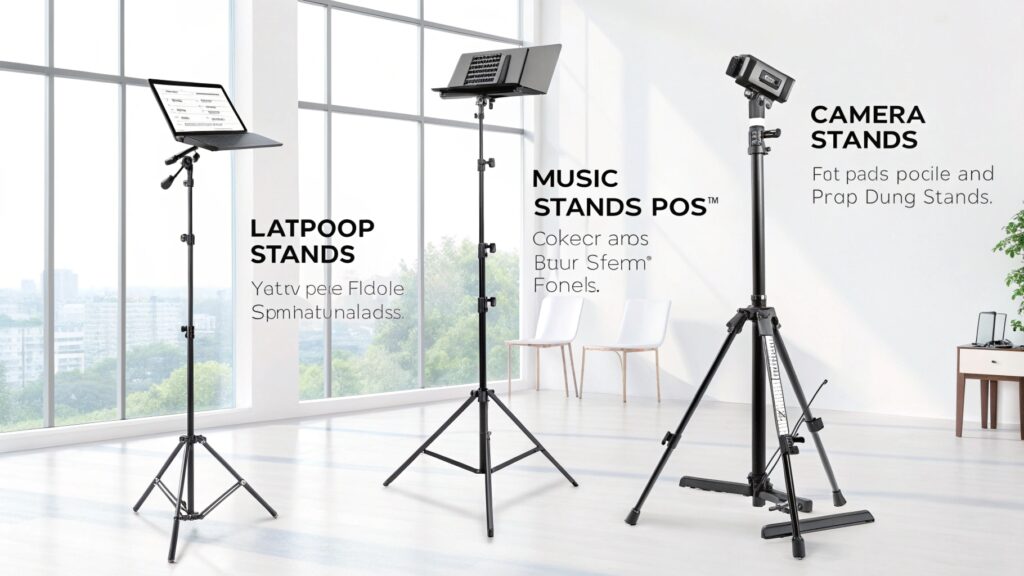
Music Stands
Music stands hold sheet music for musicians. They are made from materials like steel, aluminum, or wood. Foldable models are convenient for traveling performers, while stationary stands suit studios and concert halls. Modern stands often include page clips, integrated lights, and adjustable angles for ergonomic comfort. Musicians of all levels benefit from music stands, as they reduce strain during long practice sessions.
Laptop and Desk Stands
Laptop stands improve posture by raising laptops to eye level, reducing neck and back strain. They often have ventilation to prevent overheating and may include cable management systems. Adjustable laptop stands allow users to work sitting or standing, and multi-tier models can hold additional devices like tablets or monitors. These stands are widely used in offices, homes, and coworking spaces.
Display and Retail Stands
Display stands showcase products in stores, trade shows, and exhibitions. They enhance visibility, attract customers, and organize merchandise efficiently. Types include shelving units, banner stands, poster holders, and modular display racks. Some are portable for temporary events, while others are permanent installations. Retail stands contribute significantly to sales by improving the product presentation.
Tripod Stands
Tripod stands are essential for cameras, lighting, projectors, and other equipment. They provide stability on uneven surfaces, and their adjustable height and angle improve usability. Photographers, videographers, and presenters rely on tripod stands for precision and flexibility. Many models are lightweight and foldable, making them ideal for fieldwork.
Microphone Stands
Microphone stands are crucial for singers, public speakers, and podcasters. They allow hands-free performance and precise positioning. Types include straight, boom, and desk-mounted stands. Boom stands offer extended reach and flexibility, while desk-mounted stands are compact and ideal for recording setups.
Speaker Stands
Speaker stands elevate speakers for better sound distribution. They reduce vibrations and ensure clear audio projection in studios, concerts, and home theaters. Adjustable stands allow precise height placement for optimal listening experiences.
Plant and Decorative Stands
Plant and decorative stands elevate items to enhance room aesthetics. They come in various designs, including multi-tiered racks, minimalist frames, and ornate wooden stands. These stands not only display plants and decor but also prevent floor damage and create visually appealing arrangements.
Easels and Art Stands
Artists use easels and art stands to support canvases or sketchpads. Adjustable easels accommodate different canvas sizes, while portable models are ideal for outdoor painting. These stands enhance comfort, reduce strain, and provide stability for detailed artwork.
Bike and Sports Equipment Stands

Bike stands support bicycles for parking, maintenance, or display. Sports equipment stands organize gear like balls, bats, or rackets. These stands save space, improve safety, and increase accessibility for frequent use.
Benefits of Using Stands
Enhanced Organization
Stands provide dedicated spaces for items, reducing clutter. Organized spaces improve workflow, efficiency, and mental clarity. Offices, studios, and homes benefit from the orderliness that stands create.
Improved Accessibility
Items on stands are easier to reach, reducing strain and saving time. This is particularly useful for frequently used equipment like laptops, musical instruments, or tools.
Protection of Items
Elevating objects on stands protects them from spills, dirt, dust, or accidental damage. This prolongs the lifespan of electronics, books, decorative items, and fragile equipment.
Ergonomic Advantages
Laptop, music, and work stands improve posture, reducing neck, shoulder, and back pain. Proper height and angle adjustments contribute to comfort during prolonged use.
Aesthetic Enhancement
Decorative and display stands enhance interior design by adding style and structure. Multi-tiered plant stands, sculptural easels, and modern shelving units create visually appealing environments.
Versatility
Many stands are multi-purpose, serving different needs in various contexts. For example, adjustable tripods can hold cameras, projectors, or lights, while display stands can showcase products, brochures, or artwork.
How to Choose the Right Stand
Determine Your Purpose
Identify what you need the stand for—electronics, music, plants, retail, or sports. Purpose determines material, size, and features.
Consider Size and Weight Capacity
Ensure the stand can support the intended object safely. Overloading a stand may cause damage or accidents.
Check Adjustability Features
Height, tilt, and angle adjustments enhance usability. Flexible stands adapt to different tasks and user preferences.
Material and Durability
Choose materials suitable for your environment: metal for heavy loads, wood for style, plastic for portability. Durable materials ensure long-term use.
Portability and Storage
Foldable or lightweight stands are ideal for frequent relocation or storage. Consider ease of transport if the stand is needed in multiple locations.
Budget and Value
High-quality stands can be an investment, but they provide long-term benefits. Compare features, materials, and user reviews before purchasing.
Top Uses of Stands in Daily Life

- Holding musical instruments and sheet music.
- Supporting laptops, tablets, or monitors for ergonomic comfort.
- Displaying products, brochures, or art in retail and exhibitions.
- Elevating decorative items, plants, and sculptures at home or office.
- Stabilizing cameras, lights, and recording equipment for photography and video production.
- Organizing sports gear, bikes, and equipment.
- Supporting books, manuals, or presentation materials during teaching or workshops.\
- Serving as artistic easels for painting, drawing, or design work.
FAQs
Q1: Are stands necessary for laptops?
Laptop stands are not mandatory but significantly improve posture, airflow, and productivity, especially during long hours of work.
Q2: Can music stands hold heavy sheet binders?
Yes, high-quality music stands are designed to support thick binders without tipping or collapsing.
Q3: What materials are best for plant stands?
Wood, metal, and composite materials are common. Choose based on durability, indoor or outdoor use, and design preference.
Q4: Are foldable stands as stable as fixed stands?
Modern foldable stands are engineered for stability, with locking mechanisms and reinforced joints to ensure safety.
Q5: How do I maintain and clean my stand?
Wipe surfaces with a damp cloth, avoid harsh chemicals, and regularly check screws and joints to ensure durability and safety.
Conclusion
Stands are versatile tools that enhance organization, ergonomics, and aesthetics in everyday life. From supporting electronics and musical instruments to elevating plants and displaying products, the right stand simplifies tasks while protecting valuable items. Selecting a stand involves considering purpose, material, size, adjustability, and portability. By choosing wisely, you can improve productivity, maintain comfort, and create visually appealing spaces.
Related posts:
- https://snowdaycalculatores.com/content-cz-mobile/
- https://snowdaycalculatores.com/prosecchini/
- https://snowdaycalculatores.com/sodiceram/