Obligation linéaire is a fundamental legal concept, widely used in civil law and contract law. It represents a direct and clearly defined duty of one party towards another, ensuring enforceability and predictability. Understanding this concept is essential for businesses, legal practitioners, and individuals engaged in agreements, contracts, or financial commitments.
This article explores obligation linéaire in depth, explaining its types, applications, advantages, challenges, and practical considerations to manage obligations efficiently.
Explore obligation linéaire: types, legal framework, practical applications, benefits, and FAQs for complete understanding in contracts and business agreements.
Understanding Obligation Linéaire
Obligation linéaire, often called linear obligation, refers to a straightforward legal commitment where a party owes performance directly to another. It is different from complex obligations that may involve conditions, stages, or multiple parties. Linear obligations are the backbone of contract law, ensuring clarity and enforceability.
Key Characteristics of Obligation Linéaire
- Direct Relationship:
The obligation is directly owed to a creditor or beneficiary without intermediaries. This ensures clear accountability. - Clarity and Specificity:
Terms are explicitly defined, covering scope, deadlines, and performance criteria, which minimizes misunderstandings. - Legal Enforceability:
Courts and arbitration panels can enforce the obligation easily due to its linear nature. - Predictable Outcomes:
Since obligations are direct and explicit, parties can anticipate consequences in case of non-compliance. - Mutual Consent:
A valid linear obligation arises from agreement between parties, emphasizing mutual understanding and acceptance.
Types of Obligation Linéaire
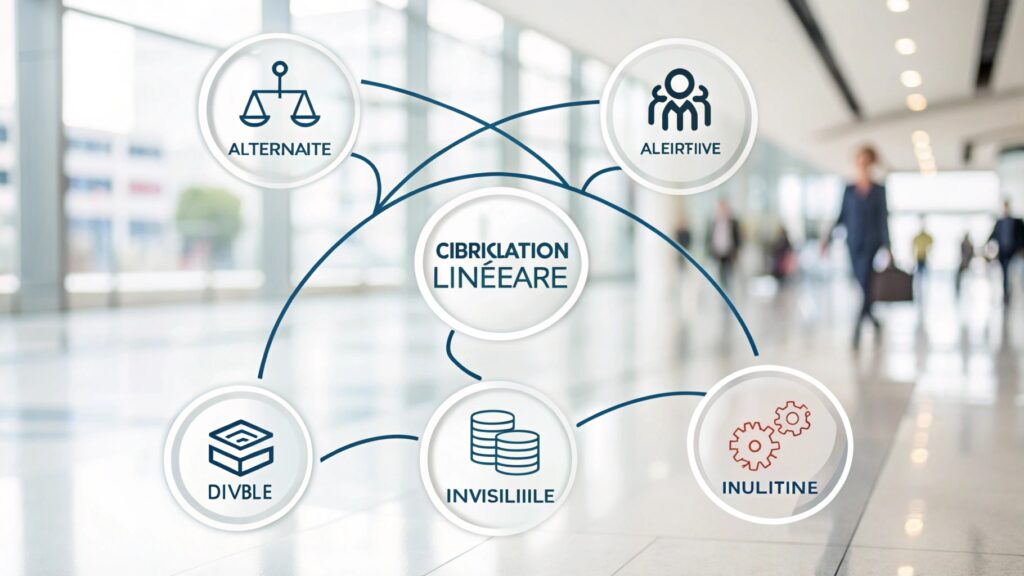
Obligation linéaire can be categorized into different types based on performance, divisibility, and number of parties involved.
Simple Obligation Linéaire
A simple linear obligation requires a single, straightforward performance. For example, paying a fixed amount of money on a specified date or delivering a particular product to a client. This type of obligation leaves little room for interpretation or dispute.
Alternative Obligation
In alternative obligations, the debtor has the right to choose between two or more performances. However, the obligation remains linear because, once the choice is exercised, the performance is direct and enforceable. Example: A supplier may deliver either brand A or brand B of a product.
Divisible and Indivisible Obligations
- Divisible Obligations:
Can be fulfilled in parts without affecting the overall obligation. Example: Paying installments for a purchase. - Indivisible Obligations:
Must be completed fully; partial performance is not acceptable. Example: Delivering a unique artwork or custom-built machine.
Joint and Several Obligations
- Joint Obligations:
Multiple debtors share the same obligation collectively. Creditors can demand performance from any or all debtors. - Several Obligations:
Each debtor is individually responsible for the entire obligation, giving the creditor the right to claim full performance from any debtor.
Legal Framework Governing Obligation Linéaire

Obligation linéaire is grounded in civil law, contract law, and commercial law principles. Legal frameworks provide clear definitions, enforceability standards, and remedies in case of breach.
Contractual Basis
All linear obligations originate from mutual agreements. Contracts clearly define the scope of performance, deadlines, and conditions. Well-drafted contracts prevent disputes and enforce accountability.
Statutory Provisions
Civil codes, such as the French Civil Code, outline obligations, rights, and remedies. These statutes ensure that linear obligations are legally recognized and enforceable.
Enforcement Mechanisms
- Court Enforcement: Courts adjudicate disputes and ensure compliance.
- Arbitration: Parties may resolve disputes through arbitration, which is faster and less formal.
- Legal Notices: Formal notices often serve as initial steps to enforce obligations.
Remedies for Breach
In case of non-performance, remedies may include:
- Payment of damages
- Specific performance (forcing completion of obligation)
- Contract termination in severe breaches
Practical Applications of Obligation Linéaire
Linear obligations are applied in many sectors due to their simplicity and enforceability.
Commercial Contracts
Linear obligations ensure clarity in supply agreements, service contracts, and leasing arrangements. For instance, a supplier is obliged to deliver 100 units of a product by a specific date.
Financial Agreements
Bank loans, bonds, and guarantees rely on linear obligations to establish clear repayment schedules, interest payments, and penalties for default.
Employment Contracts
Obligations like payment of salaries, delivery of work output, and adherence to company policies are structured as linear obligations.
Property and Real Estate Transactions
Linear obligations are used in rent agreements, mortgage payments, and installment-based property purchases, ensuring clarity and enforceability.
Government and Public Contracts
Public procurement contracts often involve linear obligations to ensure delivery timelines, quality, and compliance with regulations.
Advantages of Obligation Linéaire

- Clarity: All parties understand their responsibilities and duties.
- Ease of Enforcement: Legal systems favor clear and direct obligations.
- Reduced Risk of Disputes: Ambiguity is minimized, reducing conflicts.
- Predictability in Business: Parties can plan finances and resources accurately.
- Legal Certainty: Courts and arbitration panels enforce linear obligations efficiently.
Challenges and Limitations
Rigidity and Inflexibility
Linear obligations do not easily adapt to changing circumstances. Modifications require mutual consent, which may not always be feasible.
Complexity in Multi-party Obligations
Determining liability in joint obligations with multiple debtors can be challenging, especially in large contracts.
Risk of Misinterpretation
Poorly drafted obligations, even if linear, may cause disputes if terms are ambiguous or vague.
Enforcement Costs
Although simpler than complex obligations, legal enforcement may still require time and financial resources.
Best Practices for Drafting Obligation Linéaire
- Clearly Define Performance: Avoid vague terms; specify duties precisely.
- Set Deadlines: Include exact dates or timelines for performance.
- Include Remedies for Non-compliance: Define penalties or corrective measures.
- Use Simple Language: Reduce misinterpretation and ensure understanding by all parties.
- Consult Legal Experts: Verify compliance with applicable laws and regulations.
- Maintain Documentation: Keep records of agreements, notices, and amendments.
Frequently Asked Questions (FAQs)
What is the difference between linear and complex obligations?
Linear obligations are direct and enforceable without conditions, while complex obligations may involve multiple steps or conditional performance.
Can obligation linéaire be modified?
Yes, but both parties must mutually agree to modifications, preferably in writing, to ensure enforceability.
Are linear obligations enforceable in court?
Absolutely. Courts favor linear obligations due to their clarity and simplicity, which reduces dispute resolution time.
How does joint obligation differ from several obligations?
In joint obligations, multiple debtors share responsibility collectively, whereas in several obligations, each debtor is individually liable for full performance.
Why are linear obligations important in business contracts?
They provide predictability, reduce ambiguity, facilitate legal enforcement, and ensure fairness between contracting parties.
Conclusion
Obligation linéaire is a cornerstone of contract law and civil law systems, ensuring direct, enforceable, and predictable responsibilities. Understanding its types, legal framework, and practical applications allows individuals and businesses to draft effective contracts and manage obligations efficiently. While challenges exist, such as rigidity or multi-party complexities, adopting best practices and legal guidance maximizes benefits.